Harbin in January: what −20°C actually feels like
The short answer
Harbin in January runs between −15°C and −25°C, and the Ice and Snow World festival opens around 5 January. It is entirely manageable with the right layers, but you need about £120 of kit you probably do not own: insulated boots, thermal base layers and mittens rather than gloves.
- Expect −15°C to −25°C; the record low for the month is −38°C
- Ice and Snow World opens about 5 January and runs to late February
- Budget £120 for boots, thermals and mittens before you fly — buying there costs more
- Phones die in minutes outdoors: keep them in an inside pocket, not a coat pocket
What −20°C actually feels like
The number sounds far worse than the experience. At −20°C, dressed properly, you are comfortable for hours; the problem is the parts of you left exposed. Fingers and ears register the cold first, then any damp skin, then your phone.
Air temperature in Harbin in January runs between −15°C and −25°C, and the record low for the month is −38°C. Wind makes it feel colder still, and the ice festival sites sit out in the open, so plan for the bottom of that range rather than the average.
The rhythm that works is short bursts outside and warm recoveries indoors. Twenty to thirty minutes in the cold, then tea or a shop, then out again. It is a museum-and-café city as much as an ice city, and those indoor breaks are what make a full day possible.
When the festival runs, and when to go
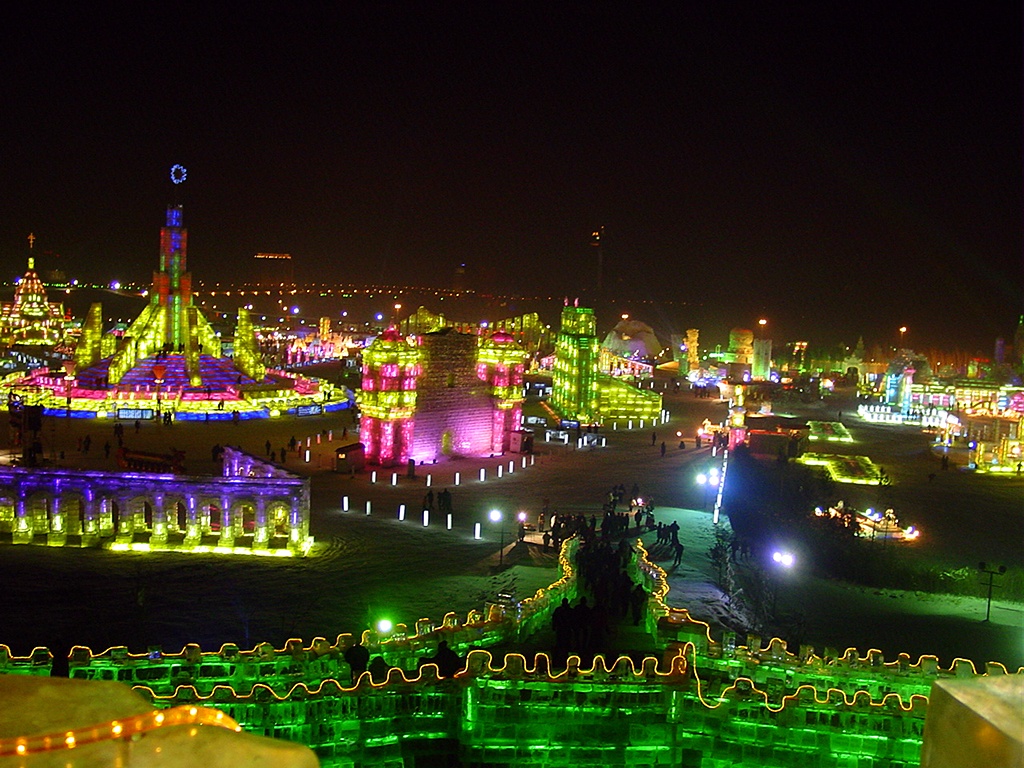
Harbin's Ice and Snow World opens around 5 January and runs to late February, weather permitting. Tickets are timed and priced higher at peak, so buy ahead for the opening fortnight and for weekends, when the site fills quickly after dark.
The sculptures look best under floodlights, so arrive in the late afternoon and stay into the evening rather than queueing at midday. The festival park sits out by the Songhua River, a short taxi or metro ride from the city centre.
Zhaolin Park, nearer the middle of town, runs its own smaller ice-lantern display that is cheaper and quicker to see. It is a good taster for the evening you arrive, before committing to the full site the following night. Tickets there are a fraction of the main park's and the walk round takes under an hour.
The city itself is worth more than the ice. The Saint Sophia cathedral, the cobbled Central Street and the frozen Songhua River — which you can walk across in January — fill a day easily, and the Russian-influenced bakeries and sausage shops are a hangover from the railway era.
The kit, and what it costs
You need about £120 of clothing you almost certainly do not already own: insulated boots with a thick sole, thermal base layers, a down or synthetic mid-layer, a windproof shell, and mittens rather than gloves so your fingers share their warmth.
Buy it in the UK. Sizing and choice in Harbin are harder to navigate as a visitor, and the first day in the wrong boots is the day you lose to cold feet. Add a hat that covers the ears, a scarf and a few pairs of hand warmers.
Underneath, layer rather than wear one heavy coat: a thermal base, a fleece or wool mid-layer and a windproof outer shell trap air and let you adjust when you step inside, where the heating runs hot and buildings warm up fast.
Boots matter more than the coat. Look for a thick, insulated sole so the cold does not rise through your feet, and buy a half-size up to fit a thick sock without cutting off circulation. Crampons that clip over the sole cost a few pounds and stop you slipping on polished ice.
Phones, cameras and the cold
Batteries hate the cold. A phone left in an outer coat pocket dies in minutes; keep it in an inside pocket close to your body, and carry a power bank the same way. Spare camera batteries belong in a pocket too, not in the camera bag.
Condensation is the other trap. Carry a cold camera or lens straight into a warm room and the glass fogs for half an hour; let the gear adjust inside a zipped bag first, then take it out. A silica gel sachet in the bag helps, and a spare battery kept warm extends a day's shooting.
Screen brightness drains the battery faster outdoors, so dim it, and accept that long photo sessions in the cold may need the phone back indoors to recharge before the evening starts. Some visitors carry a second, older phone purely as a camera so the main one stays warm and charged.
What a day costs, and how to time it
A day in Harbin is cheap by UK standards. A four-star hotel runs about ¥400–700 per room, a taxi across town ¥20–40, and a bowl of warming noodles ¥15–30. The festival ticket is the one big line, and it earns its price.
Start late. Daylight is short, the sun sets before 17:00, and the cold bites hardest in the wind of early morning. A late breakfast, an indoor museum or two, then the ice at dusk is the sensible shape of the day.
Keep one flexible day in reserve. Severe cold occasionally delays or closes things, and a spare day lets you move the festival visit to a clearer, quieter evening without losing anything else on the itinerary. It also gives you room for a rest day if the cold has caught up with you.
Eating is a warm-up in itself. Northeast China specialises in stews and dumplings, and a shared pot of pickled-cabbage hotpot or a plate of guo bao rou for ¥40–70 will refill you faster than any café. Book a table near your hotel so the walk back stays short.