Silk Road Odyssey
Xi'an, Dunhuang and Kashgar along the Hexi Corridor, with the Mogao Caves and Crescent Lake.
The short answer
Silk Road Odyssey is a fourteen-day overland route from Xi'an to Kashgar, following the Hexi Corridor through Gansu and into Xinjiang. The set pieces are the Mogao Caves at Dunhuang, with a timed entry slot and a specialist guide, and the Singing Sand Dunes and Crescent Lake at sunset. The itinerary runs from May to October, when the corridor is warm and the mountain passes are open. Some legs use two overnight sleeper trains and one internal flight between Dunhuang and Kashgar; all tickets are booked for you.
- Fourteen days along the Hexi Corridor, from the Terracotta Army to the bazaars of Kashgar
- Mogao Caves entered on a timed slot, with a specialist guide for the painted caves
- Crescent Lake and the Singing Sand Dunes seen at sunset, when the sand changes colour
- Kashgar's Sunday livestock market is the working market, not a staged version
- Two overnight sleeper trains and one internal flight, all booked for you
Day by day
-
Day 1 · Xi'an
Arrival in Xi'an
Arrive in Xi'an and transfer to a hotel inside the Ming city wall. Xi'an was the eastern end of the Silk Road and China's capital for 13 dynasties. An easy evening walk on the city wall or through the Muslim Quarter food street sets the tone for the route ahead.
-
Day 2 · Xi'an
The Terracotta Army
Reach the Terracotta Army, 40 km (25 miles) east of the city, before the 10:00 coach arrivals. Pit 1 holds around 6,000 figures, each with a different face. In the afternoon, the Shaanxi History Museum explains the dynasties you are about to travel through.
-
Day 3 · Xi'an
Muslim Quarter and the Great Mosque
Xi'an's Great Mosque blends Chinese architecture with Islamic function, serving the Hui community since 742 AD. Walk the Beiyuanmen food street for yangrou paomo and roujiamo, then visit the Big Wild Goose Pagoda, built in 652 to house sutras carried back from India.
-
Day 4 · Zhangye
High-speed rail into Gansu
Board the high-speed train west along the Hexi Corridor, the narrow strip of green between the Qilian mountains and the Gobi. The run to Zhangye takes about seven hours and follows the old caravan road. Arrive in the evening and check into a hotel in the city centre.
-
Day 5 · Zhangye
The Rainbow Mountains
Day trip to the Zhangye Danxia landform, 40 km (25 miles) from the city, where banded sandstone runs in reds, greens and yellows across the ridges. Shuttle buses link four viewing platforms. Late afternoon is the best light, when the bands are at their strongest.
-
Day 6 · Jiayuguan
Jiayuguan fort
Drive or take the short rail hop to Jiayuguan, where the westernmost pass of the Ming Great Wall guards the corridor. The fort's walls enclose an area of about 33,500 sq m, with the wall running out toward the desert. Climb the Overhanging Great Wall for the view.
-
Day 7 · Dunhuang
Crescent Lake and the Singing Sand Dunes
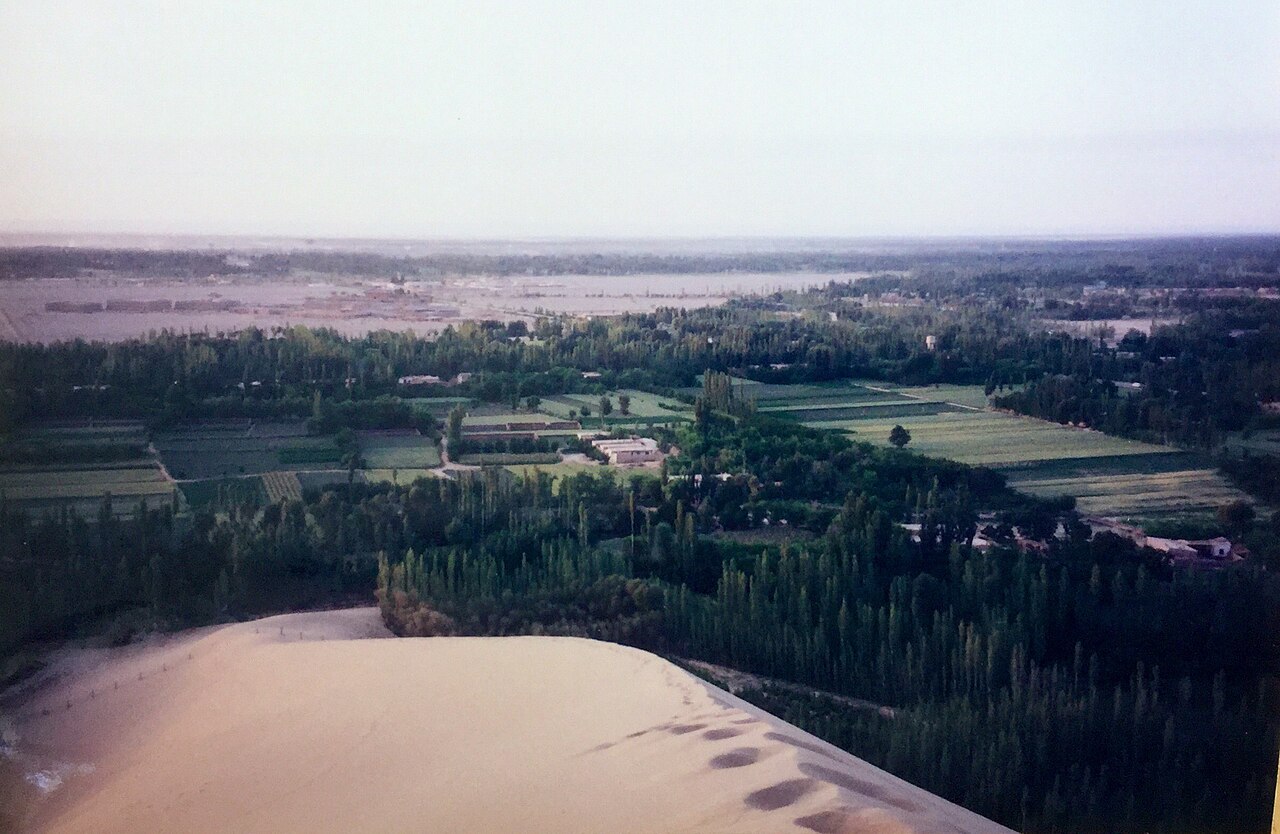
Travel on to Dunhuang, the oasis town at the edge of the Taklamakan. In the late afternoon, walk the Mingsha dunes and find the Crescent Lake that has held its shape below them for around 2,000 years. The dunes hum in the wind; sunset is the time to be up on the ridge.
-
Day 8 · Dunhuang
The Mogao Caves
A morning at the Mogao Caves, a UNESCO site with 735 painted caves cut into the cliff from the 4th century onward. Entry runs on timed tickets with a guide, and the pools of pigment are best seen in the cooler part of the day. The Shazhou night market is worth an evening.
-
Day 9 · Dunhuang
Yumen Pass and the western desert
Head west to Yumen Pass, the Han-dynasty gate that marked the edge of China on the Silk Road, and the nearby Han Great Wall, built of rammed earth. The desert here is silent and empty. Return to Dunhuang for a final night.
-
Day 10 · Kashgar
Flight to Kashgar
Fly west to Kashgar, at the foot of the Pamirs and once the crossroads of the northern and southern Silk Road routes. The afternoon is free for the old town's alleys. Remember the time zone shifts by two hours in Xinjiang, though the official clock stays on Beijing time.
-
Day 11 · Kashgar
The old town and Id Kah Mosque
Walk the narrow lanes of the Kashgar old town, where coppersmiths and hat-makers still work, and visit the Id Kah Mosque, which can hold around 20,000 worshippers. Spend the late afternoon in the Handicraft Bazaar, one of the largest in Central Asia.
-
Day 12 · Kashgar
The Sunday livestock market
The Sunday livestock market at Awyghur Kol is where farmers and herders trade cattle, sheep and horses, the working version rather than a display. Combine it with the Apak Khoja mausoleum, the holiest Muslim site in Xinjiang. The market runs on Sundays, so the itinerary is timed around it.
-
Day 13 · Kashgar
Karakul Lake and the Pamirs
Drive the Karakoram Highway toward the Pamirs, climbing past Opal and Bulungkol to Karakul Lake at 3,600 m (11,811 ft), set beneath Muztagh Ata at 7,546 m (24,757 ft). The lake reflects the peak on still days. Return to Kashgar in the evening.
-
Day 14 · Kashgar
Departure
Transfer to Kashgar airport for the flight back to Beijing or Shanghai and the onward service to the UK. Connections to LHR run through a mainland hub, so most travellers arrive home the following day.
What stands out
Mogao Caves
735 painted caves from the 4th century onward, entered on a timed ticket with a specialist guide.
Crescent Lake and the Singing Sand Dunes
A crescent of water below the Mingsha dunes, best seen in the hour before sunset.
Jiayuguan fort
The westernmost pass of the Ming Great Wall, still guarding the Hexi Corridor in the desert.
Kashgar Sunday livestock market
The working market where herders trade livestock, timed into the itinerary around its Sunday date.
Karakul Lake
A Pamir lake at 3,600 m (11,811 ft), reflecting Muztagh Ata on any calm morning.
Practical
| Best months | May–October, when the corridor is warm |
|---|---|
| Sleeper trains | Two overnight legs, couchettes booked for you |
| Internal flights | One: Dunhuang to Kashgar |
| Longest rail leg | Xi'an to Zhangye, about 7h |
| Key distances | Xi'an–Dunhuang about 1,700 km (1,056 miles) by rail |
| Group size | 2–12 travellers |
| Trip length | 14 days / 13 nights |
| Altitude | Karakul Lake 3,600 m (11,811 ft); most of the route below 1,500 m |
What's included
- Thirteen nights in hotels and two nights on sleeper trains
- Daily breakfast and most dinners along the corridor
- All high-speed and sleeper rail tickets
- The internal flight from Dunhuang to Kashgar
- English-speaking guide in Xi'an, Gansu and Xinjiang
- Mogao Caves timed entry and specialist cave guide
- Private vehicles and drivers for all day trips
- 24-hour support line in the UK and China
Not included
- International flights to and from China
- Chinese visa, only if your stay needs one (UK passports are visa-free for up to 30 days until 31 December 2026)
- Travel insurance
- Lunches, and dinners not listed
- Personal spending and drinks
- Tips for guides and drivers